







Welcome Back
Sign in to be closer to your community!
Follow other divas, like and comment
on their posts, message them, and see
who loved your posts!
 Login with Google
 Login with Twitter
OR
Join FashionPotluck.com
Create your own profile in order to create content, follow other divas and like their posts, use our own messenger, and be a part of a growing international women community!
Signup as a Community Member

WELCOME TO OUR COMMUNITY
Fashion Potluck -
the first social media
platform for women.
You are free to read/watch & create content,
express your true self, and interact with others.


LIFESTYLE
Cropped vs Standard-Length Leather Jackets: Comparing Proportions

 by
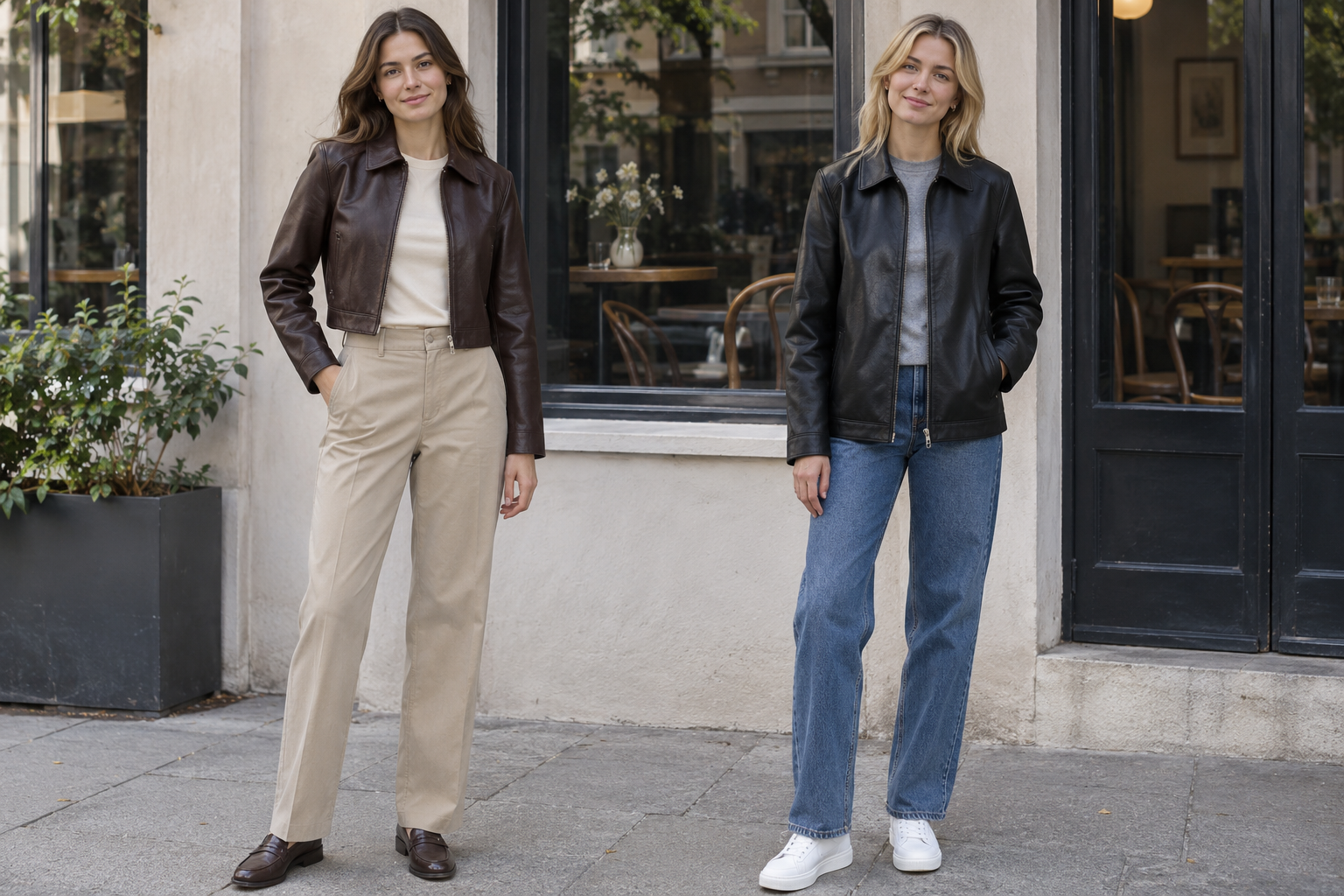

A leather jacket’s hem changes how your outfit comes together. It also affects coverage, layering, and comfort while sitting.
The cropped vs regular leather jacket choice depends on your torso, trousers, and daily routine. Height alone does not settle it.
Key Takeaways
Length and fit describe different parts of a jacket.
Check both before deciding which proportions work with your clothes.
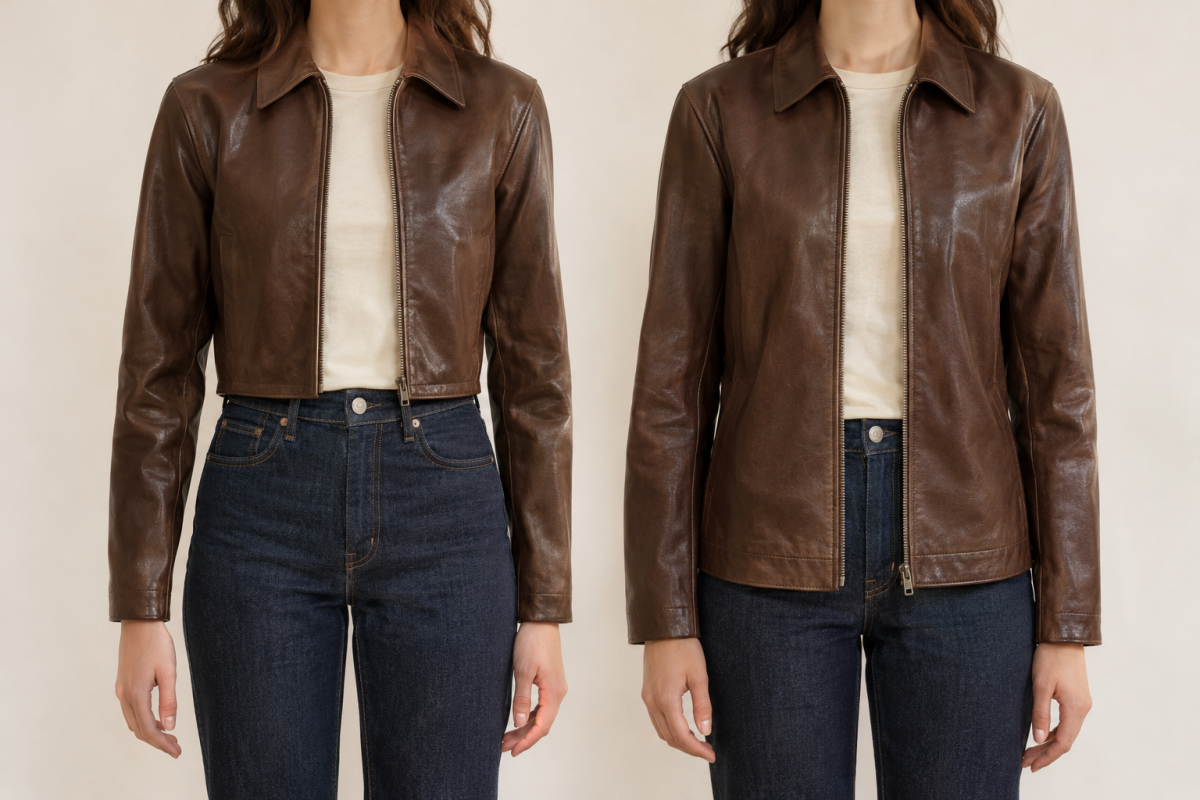
Cropped jackets end higher on the torso than longer versions of a similar design.
Standard length has no single measurement across brands.
Trouser rise changes the relationship between your waistband and jacket hem.
A cropped body can still have full-length sleeves.
Check front and back coverage while standing, sitting, and reaching.
What Counts as Cropped or Standard Length?
“Cropped” describes a deliberately shortened body, but the exact stopping point varies.
“Standard” also depends on the maker, style, and intended proportions.
These differences are relative. A short bomber and a cropped blazer can have different measurements despite sharing a similar length description.
Use labels to narrow your search. Use garment measurements and a fitting to make the decision.
Start with Your Trouser Waistband
Your trousers provide a useful reference point for jacket length.
Try the rise you normally wear rather than changing trousers just for the fitting.
With higher-rise trousers:
A shorter jacket may meet or overlap the waistband.
A tucked top makes the jacket’s stopping point easier to see.
Check whether the waistband remains comfortable beneath the hem.
With lower-rise trousers:
A cropped jacket may leave more of your top visible.
Sitting or reaching may expose your lower back.
A longer jacket may provide the coverage you prefer.
Neither arrangement is automatically better. Decide whether you enjoy the visible layers and whether the coverage works during movement.
Check your outfit from the side, too. A hem can look balanced from the front while catching on a belt at the back.
Separate Body Length from Overall Fit
A shorter jacket does not have to fit tightly.
Chest room, shoulder width, sleeve length, and body length are separate measurements.
The description of Nudie Jeans’ Blake leather jacket pairs a regular fit with a short, boxy silhouette.
That distinction matters during a cropped leather jacket fit check. “Regular fit” does not promise a longer hem.
Check these areas individually:
Shoulders: Do they sit comfortably without pulling?
Chest: Can you close the front over your intended layer?
Sleeves: Do the cuffs suit your arm length?
Hem: Does it stop where you want?
Upper arms: Can you bend and reach comfortably?
Sizing up changes several areas at once. It may add unwanted width without providing the extra body length you need.
Read Length Measurements Carefully
A useful jacket length guide needs a defined measuring point.
Check whether the retailer measures from the shoulder, back neck, or another stated position.
For example, Whistles’ Agnes cropped biker listing gives a neck-to-hem measurement of 55 centimetres for a size 12.
That figure describes one garment and size. It is not a universal cropped-jacket measurement.
Before ordering:
Find the measurement method.
Confirm which size the published length describes.
Measure a jacket you already like using the same method.
Ask about front and back lengths if the hem is uneven.
A product name such as Jigsaw’s Leather Cropped Jacket identifies the intended silhouette, but you still need measurements to predict its position on you.
Model photographs help you understand the design. Your torso length and chosen size determine where the same jacket will finish.
Choose the Proportions Before the Colour
Keep your first comparison focused on length and shape.
Colour can influence your preference before you have checked whether the garment works.
While browsing Mens Burgundy Jackets, compare the hem position and body measurements before deciding how the shade fits your wardrobe.
Use familiar clothes for the comparison:
A plain top shows the outline clearly.
Your usual trousers reveal the waistband relationship.
Normal footwear helps you judge the complete outfit.
Your intended layers show how much fabric extends below the jacket.
Take front, side, and back photographs at a consistent angle. Compare the outfits without changing your stance between pictures.
Test Length During Your Normal Routine
A standing mirror check misses how the hem behaves throughout the day.
Spend a few minutes sitting and moving before deciding.
For a cropped jacket:
Sit and check lower-back coverage.
Reach forward without holding the hem down.
Check whether your shirt pulls out of your trousers.
Wear your usual bag and assess where it rests.
For a standard-length jacket:
Sit and check whether the lower front presses upward.
Look for bunching above your lap.
Check whether pockets remain easy to reach.
Walk normally and notice whether the hem catches at your hips.
A jacket should work without repeated adjustment. If you keep pulling it down or lifting it away, try another length or pattern.
Make the Choice Around Repeat Outfits
Choose for the clothes and activities that fill your week.
An appealing photograph is less useful than a jacket you enjoy wearing repeatedly.
Consider cropped length if you prefer:
A higher stopping point above your hips.
Visible waistbands or deliberate layers.
Less jacket material around your lap.
Consider standard length if you prefer:
More overlap over everyday trousers.
Less exposure during reaching.
A longer outline with your usual tops.
Neither option belongs to a particular height or body type. Test the relationship between your torso, waistband, and garment measurements.
Conclusion
Choose cropped or standard length by where the hem sits with your everyday clothes. Check body length separately from width and sleeve fit.
Use matching measurement methods, then test seated comfort and movement. The right proportions should give you the appearance and coverage you want.
FAQs
Some buying questions concern adjustments after you find a jacket you like.
These answers cover alterations and differences between front and back hems.
Can a Tailor Shorten a Standard Jacket into a Cropped One?
Sometimes, but shortening leather can affect pockets, zips, lining, and waistband construction. The existing design may leave little room for alteration.
Ask a leather specialist to assess the jacket first. Buying the intended length may be more practical than rebuilding the lower section.
Should the Front and Back Hems Be Exactly the Same Length?
Not necessarily. Some jackets have curved hems, extended backs, or shaped fronts as part of their design.
Check whether the difference matches the product photographs. If it appears unexpected, ask the retailer before assuming it is a fault.
Words Minimum :
Add Comments