









Welcome Back
Sign in to be closer to your community!
Follow other divas, like and comment
on their posts, message them, and see
who loved your posts!
 Login with Google
 Login with Twitter
OR
Join FashionPotluck.com
Create your own profile in order to create content, follow other divas and like their posts, use our own messenger, and be a part of a growing international women community!
Signup as a Community Member

WELCOME TO OUR COMMUNITY
Fashion Potluck -
the first social media
platform for women.
You are free to read/watch & create content,
express your true self, and interact with others.


LIFESTYLE
Leather Blazer vs Leather Overshirt: Where Each Works

 by
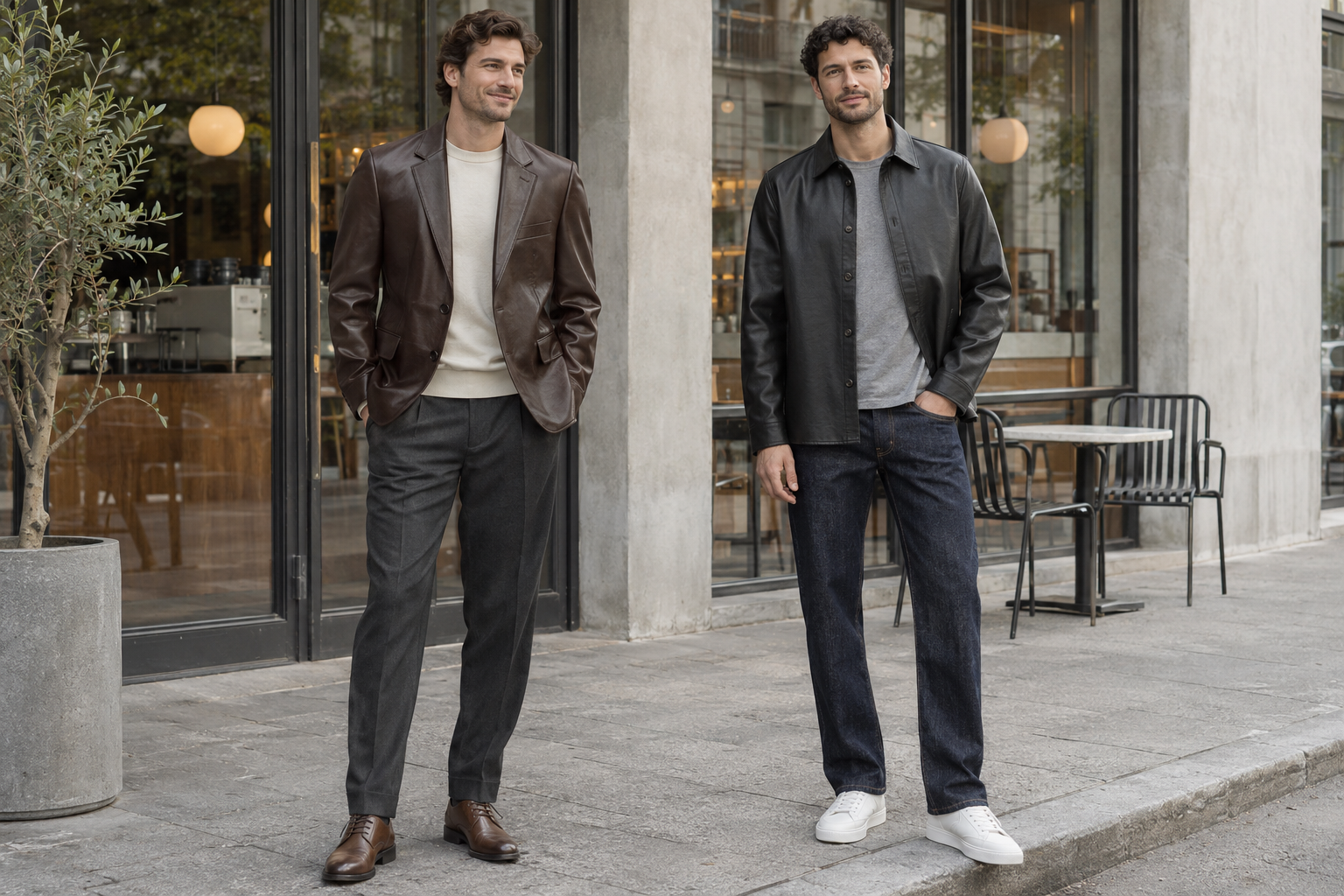

A leather blazer brings tailoring details to an outfit. A leather overshirt borrows its shape from a shirt, usually with a simpler front.
The leather blazer vs overshirt choice depends on your routine. Consider dress codes, layers, seated comfort, and how much structure you enjoy wearing.
Key Takeaways
Both styles vary in length, fit, and construction.
Check the individual garment rather than assuming every blazer is fitted or every overshirt is roomy.
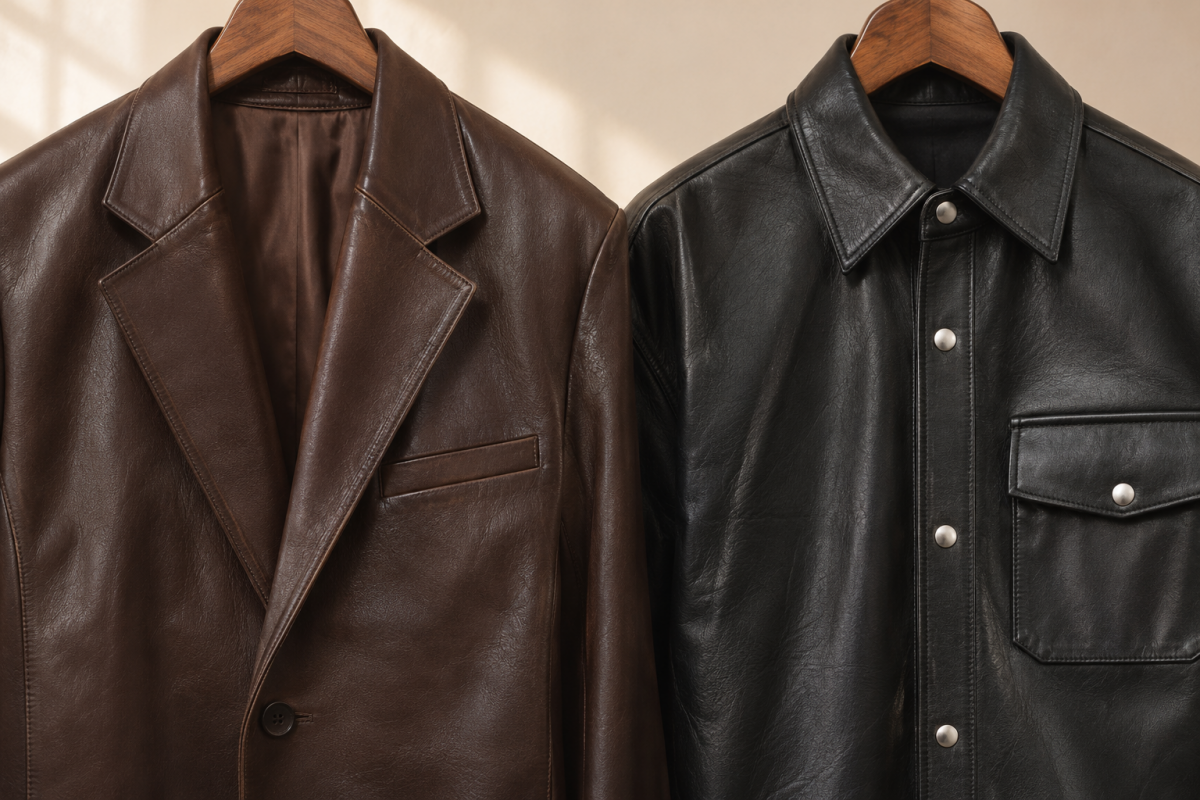
A leather blazer usually has lapels and tailoring-inspired pockets.
A leather overshirt usually has a shirt collar and button or snap closure.
Blazers can suit dinners and workplaces that allow leather.
Overshirts work well as casual outer layers.
Neither style name establishes warmth, weight, or layering room.
What Separates a Leather Blazer from an Overshirt?
Start with the neckline, front fastening, and body shape.
These features affect how the jacket sits over your clothes and frames your upper body.
These are common features rather than fixed rules. An oversized blazer can feel relaxed, while a closely cut leather shirt jacket may offer little layering room.
Look at the back as well. Vents, yokes, seams, and waistband details can change the shape considerably.
Choose Around Your Actual Dress Code
The occasion matters more than whether one design looks smarter in isolation.
Think about where you will wear it most often.
A leather blazer may work for:
Dinner at a restaurant without a formal dress requirement.
A creative workplace that permits leather.
An evening gathering with tailored trousers.
Presentations where your office accepts less traditional tailoring.
A leather overshirt may work for:
Weekend plans with jeans or chinos.
A casual office over a plain cotton top.
Travel days involving frequent sitting.
An extra layer for mild, dry conditions.
Check the setting before treating leather blazer styling as a substitute for conventional tailoring. Some workplaces expect a fabric jacket regardless of cut.
Read Beyond the Product Name
Designers sometimes combine features from several categories.
Use the description and photographs to establish what you are buying.
The details of H&M’s leather overshirt include concealed front snaps, a shoulder yoke, cuff fasteners, and a gently rounded hem.
Those features describe its shirt-like construction more clearly than the word “overshirt” alone. They also show that chest pockets are optional.
The description of COS’s leather blazer bomber jacket combines notch lapels and a button closure with an elasticated hem.
A hybrid design can therefore sit between familiar categories. Check whether its hem and shoulder shape match the outfit you have in mind.
Among men’s black leather jackets, assess lapels, collars, and body length before deciding whether the colour suits your wardrobe.
Black leather alone does not make a garment formal. Its shape, surface finish, pockets, and hardware all contribute to the overall appearance.
Check Layering Room and Seasonal Use
An overshirt does not automatically mean a thin, unlined garment.
A blazer does not automatically provide more insulation.
For example, Versace’s leather overshirt specifications list a padded quilted lining alongside a pointed collar and snap-button front.
Read these details separately from the style label:
Body and sleeve lining.
Added padding or insulation.
Leather type and finish.
Garment measurements.
Recommended cleaning method.
Try your intended layers during the fitting. Check the upper arms and shoulders as carefully as the chest.
A thick cotton sweater can fill space quickly. Do not assume a straight body gives enough room everywhere else.
Build an Outfit Around the Neckline
Lapels and shirt collars create different frames around your face.
Keep the first outfit simple so you can judge the jacket’s proportions clearly.
For a leather blazer:
Start with a plain cotton crewneck or fine knit.
Try tailored trousers or clean, straight chinos.
Check whether a shirt collar sits neatly inside the lapels.
Choose shoes that suit the occasion’s dress expectations.
For a leather overshirt:
Try a T-shirt beneath the open front.
Pair it with jeans or casual trousers.
Check whether the lower layer shows beneath the hem.
Test the collar against any shirt worn underneath.
Two shirt collars can compete for space. Wear them together during the fitting rather than discovering the problem after purchase.
Test Comfort Open, Closed, and Seated
A jacket can look balanced standing still yet feel awkward during ordinary movement.
Spend a few minutes checking how it behaves.
Fasten it without pulling the front edges together.
Sit and check pressure across the waist.
Reach forward without forcing your shoulders.
Bend your elbows and assess sleeve room.
Put your phone in its intended pocket.
Wear your usual bag to check strap placement.
For a blazer, watch whether the lapels lie comfortably or pull away sharply. Check the rear hem and any vents while seated.
For an overshirt, look for strain between fasteners. Confirm that the collar and cuffs remain comfortable with the front closed.
Conclusion
Choose a leather blazer for tailoring details that suit your occasions. Choose a leather overshirt for a shirt-like layer that works with casual clothes.
Check the actual cut, lining, length, and movement before buying. Your dress code and usual layers matter more than the product name.
FAQs
Some questions concern wearing habits beyond the initial outfit choice.
These answers cover tucking and whether an overshirt needs another layer beneath it.
Should You Tuck a Leather Overshirt into Your Trousers?
Most jacket-weight overshirts are better assessed as outer layers. Tucking one can create considerable bulk around the waistband.
A thinner leather shirt may be designed differently. Follow its styling guidance and check seated comfort before deciding to wear it tucked.
Can You Wear a Leather Overshirt Without a T-Shirt Underneath?
Check whether the maker intends it as a shirt or outerwear. Examine the inside seams, lining, and fasteners for direct-skin comfort.
Leather and lined garments may need specialist cleaning. A washable cotton layer underneath can make everyday wear easier to manage.
Words Minimum :
Add Comments