









Welcome Back
Sign in to be closer to your community!
Follow other divas, like and comment
on their posts, message them, and see
who loved your posts!
 Login with Google
 Login with Twitter
OR
Join FashionPotluck.com
Create your own profile in order to create content, follow other divas and like their posts, use our own messenger, and be a part of a growing international women community!
Signup as a Community Member

WELCOME TO OUR COMMUNITY
Fashion Potluck -
the first social media
platform for women.
You are free to read/watch & create content,
express your true self, and interact with others.


LOOKS
Nobody Warns You About This Embroidery Digitizing Trap

Product details:
 by
by 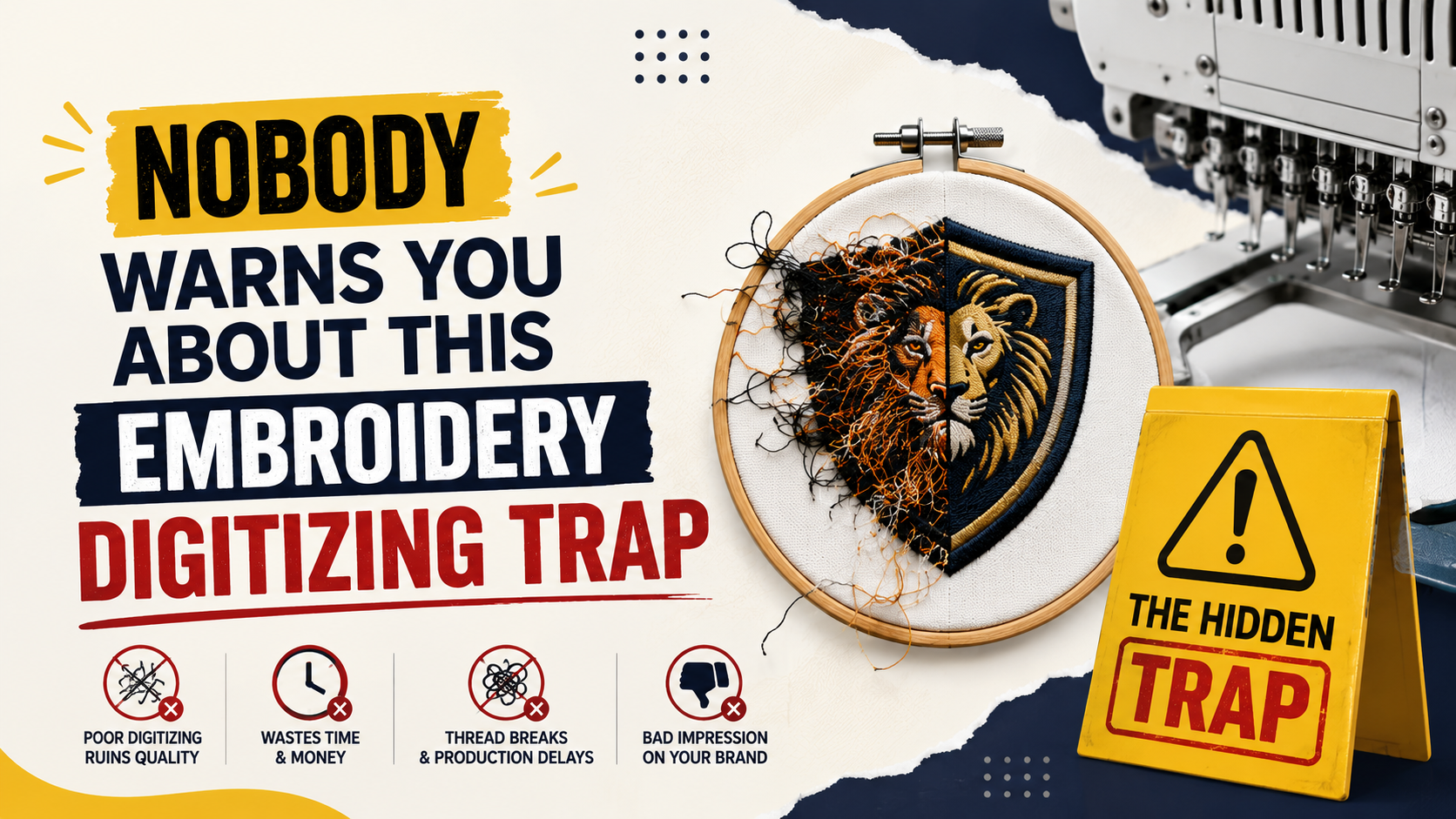
Most people jump into embroidery full of excitement. They pick a design, send it off to get digitized, load the file, press start, and wait for something beautiful. Then the machine stops. Thread breaks everywhere. The fabric puckers. The design looks nothing like what they expected. Sound familiar? The embroidery digitizing trap is real, and almost nobody warns you about it before it costs you time, materials, and clients. The good news is that working with an expert embroidery digitizer from the very beginning is the single fastest way to avoid it entirely.
This trap does not just catch beginners. Experienced shop owners fall into it too. They assume that a cheap file or a quick image conversion will work just fine. They skip the test sew-out. They do not ask whether the digitizing service for embroidery adjusted settings for their specific fabric. And they pay the price when an entire production run falls apart. Understanding what the trap really is makes it much easier to avoid.
What Is the Embroidery Digitizing Trap?
The embroidery digitizing trap is the false belief that any digitized file will stitch correctly on any fabric with any machine. This belief leads people to accept low-quality files, skip testing, and rush straight into production. The trap is that a design can look perfect on a screen and still fail completely on fabric.
Embroidery digitizing is the process of converting artwork into a stitch file that tells an embroidery machine exactly how to sew a design. The file controls stitch type, stitch density, stitch sequence, underlay stitches, pull compensation, thread color order, and pathing. When even one of these elements is wrong for the fabric or machine being used, the whole design suffers. Most people never know this until it is too late.
The Trap Nobody Talks About: The Preview Looks Fine
Here is the part that catches almost everyone off guard. You receive your file. You open it and see a beautiful simulation of the finished design. The colors look great. The lines are sharp. You feel confident. You load the file and press start. Then it all falls apart.
The preview is not a sew-out. A simulation shows what the design is supposed to look like, not how it will actually behave on fabric. It cannot show you whether the stitch density is too high for your jersey knit. It cannot show you whether the underlay stitches are missing. It cannot predict whether the thread will snap every 30 seconds or whether the fabric will pucker badly after washing.
I've noticed that this is where most shops lose money. They trust the preview and skip the test. They start a run of 200 shirts only to discover the design is a wrinkled, unreadable mess. That is the trap, and it costs businesses real money every single day.
Why Cheap Digitizing Makes the Trap Worse
Let's be honest about something. The price of a digitizing file can feel like a small detail when you are focused on production costs. A file for five dollars or ten dollars sounds attractive. But here is what most cheap embroidery digitizing services skip:
Fabric-specific settings. Every fabric behaves differently. Fleece stretches. Denim is stiff. Pique polo shirts have a textured surface that affects how stitches sit. A file built for a general cotton shirt will not stitch cleanly on any of these. Professional digitizing services for embroidery adjust density, underlay, and pull compensation for the actual fabric you are using. Cheap services do not.
Proper pathing. Pathing is the route the machine takes as it stitches from one element to the next. Poor pathing creates too many jump stitches, messy thread trims, and tangled thread between design elements. It slows production down and makes the back of every garment look like a mess of loose threads.
Correct pull compensation. When a machine stitches, the fabric naturally pulls inward. Pull compensation adjusts the stitch edges to account for this movement. Without it, round shapes look pinched, text looks squeezed, and borders do not line up with fills. This is one of the most overlooked settings in cheap file services.
Test sew-out before delivery. The best embroidery digitizing services always recommend running a physical test on the same fabric as the final garment. Cheap services skip this entirely. They deliver a file and move on. You are left to discover the problems yourself, usually in the middle of a production run.
The Hidden Traps Inside a Stitch File
You may notice that even when a design looks complex on paper, the problems usually come from a small number of technical errors inside the file. Here is what to watch for:
Wrong stitch type for each element. There are three main stitch types: running stitch, satin stitch, and fill stitch. Each serves a different purpose. Satin stitch works for borders and text. Fill stitch works for large solid areas. Running stitch works for fine details and outlines. Using the wrong stitch type for an element is one of the most common hidden traps. It creates uneven coverage, broken threads, or designs that unravel over time.
Missing underlay stitches. Underlay is the foundation layer that locks the fabric in place before the main stitching begins. Without it, top stitches sink into the fabric, the design loses its shape, and puckering becomes unavoidable. Many cheap files skip underlay entirely or set it incorrectly. A professional custom embroidery digitizing service always builds proper underlay for every design element.
Overcrowded stitch density. Stitches that are packed too tightly damage the fabric, cause needle and thread breaks, and make the finished design feel stiff and heavy. Satin stitches longer than 12mm are especially dangerous because the thread has no support in the middle and sags over time. Professional digitizing embroidery services always balance density for the design and the fabric.
Incorrect small text digitizing. Small lettering is one of the sneakiest traps in embroidery. Letters that look crisp in a preview blur together or become completely unreadable when stitched. Text needs to be at least 4 to 6mm tall to stitch cleanly, and the column width must be wide enough for the needle to pass through without overlapping. This is a level of detail that only skilled embroidery digitizing services usa providers get right consistently.
Wrong file format for your machine. Different embroidery machines read different file formats. DST works for most Tajima commercial machines. PES is for Brother machines. JEF is for Janome. EXP works for Melco and Bernina. Loading the wrong format can cause the machine to misread commands, skip stitches, or stop entirely. Always confirm the file format with your digitize embroidery service before placing an order.
How to Avoid the Embroidery Digitizing Trap
Knowing the trap exists is the first step. Avoiding it is simple when you follow the right process. Here is what works:
Always request a test sew-out. Before running any production order, stitch the design on the same fabric type as your final garment. This reveals density problems, puckering, thread breaks, and pathing issues before they affect real stock.
Share fabric details with your digitizer. Tell your embroidery digitizing service near me or online provider exactly what fabric you are using. Provide the weight, stretch level, and texture. A skilled digitizer will adjust the settings accordingly.
Ask about pull compensation. If your digitizer cannot explain what pull compensation is or how they set it for your design, find a different service. This is a basic requirement for any professional custom embroidery digitizing services in usa.
Check the stitch count. A stitch count that is extremely low or surprisingly high for the size of your design is a warning sign. Very low counts suggest the design is underfilled. Very high counts suggest it is overdense and likely to break thread.
Never trust a preview alone. Simulations are helpful but not final. The real test is a physical stitch on real fabric. Any online embroidery digitizing service provider worth trusting will tell you the same thing.
How IDigitize Helps Businesses Escape This Trap
IDigitize was built for exactly this reason. Too many businesses have wasted money on bad files, ruined garments, and broken production runs because nobody warned them about the real requirements of quality embroidery digitizing. IDigitize changes that.
As one of the trusted best embroidery digitizing services providers in the usa, IDigitize reviews every design for the specific fabric, machine, and production environment it will be used in. Every file includes proper underlay, correct density, smart pathing, accurate pull compensation, and the right file format for the client's machine. There are no guesses and no generic settings.
Clients who use IDigitize as their online embroidery digitizing service report that the difference is immediately obvious. Their machines run cleaner. Their thread stops breaking. Their designs come out looking sharp and professional every time. That is what a true best embroidery digitizing service provider in usa delivers: not just a file, but a file that actually works in production.
That's why so many shops across the country now use IDigitize as their go-to embroidery digitizing service usa for logos, custom designs, corporate orders, and everything in between. Once you experience production that runs without problems, you never want to go back.
Final Thoughts
The embroidery digitizing trap is not a mystery once you know what it is. It is the gap between how a design looks on screen and how it performs in real production. It is the cost of cheap files, skipped testing, and files that were never built for your specific fabric or machine.
Every shop owner, decorator, and brand that has fallen into this trap wishes someone had warned them sooner. Now you know. Choosing the right embroidery digitizing services online provider, asking the right questions, running a proper test sew-out, and understanding the basics of what makes a file production-ready are all it takes to stay out of the trap for good.
Do not let a bad file hold your business back. Invest in quality embroidery digitizing service in us from the start, and the results will speak for themselves on every garment you produce.
Frequently Asked Questions
What is the embroidery digitizing trap and how does it happen?
The embroidery digitizing trap happens when someone accepts a stitch file that looks correct in a preview but fails during real production. Poor embroidery digitizing settings like wrong density, missing underlay, or bad pathing cause the file to produce broken threads, puckered fabric, and unreadable designs.
Why do cheap embroidery digitizing services cause more problems than they solve?
Cheap digitizing services embroidery providers skip key steps like fabric-specific settings, pull compensation, and test sew-outs. This leads to files that fail in production and cost far more in wasted materials and rework than a professional service would have.
How can I tell if my embroidery digitizing file is the problem and not my machine?
If the same machine stitches other designs cleanly but fails on one specific file, the file is almost certainly the problem. A professional embroidery digitizing service can review the stitch path, density, and underlay to identify what is wrong and rebuild the file correctly.
What should I always ask before ordering from an embroidery digitizing service?
Always ask whether they adjust settings for your fabric type, how they handle pull compensation, what file formats they deliver, and whether they recommend a test sew-out. These questions quickly reveal whether a best embroidery digitizing service is truly professional or not.
Is online embroidery digitizing as reliable as in-person services?
Yes, when provided by a skilled team. A quality online embroidery digitizing service provider can deliver production-ready files for any fabric and machine, communicate through revisions, and guarantee the same level of accuracy as any local service, often faster and at a better price.
Words Minimum :
Add Comments